Vigora is in pilot at two factories — a specialty coffee roastery and a soluble coffee factory. We share what's running, who's using it, and what we're learning — current as of this week.
Counters refresh every 15 minutes. They reflect what Vigora is observing across both deployments. No hand-tuning, no curated highlights — current operational reality.
Aggregate counts only. No tenant identifiers, no signal values, no batch details, no operator names ever leave the sites.
The site
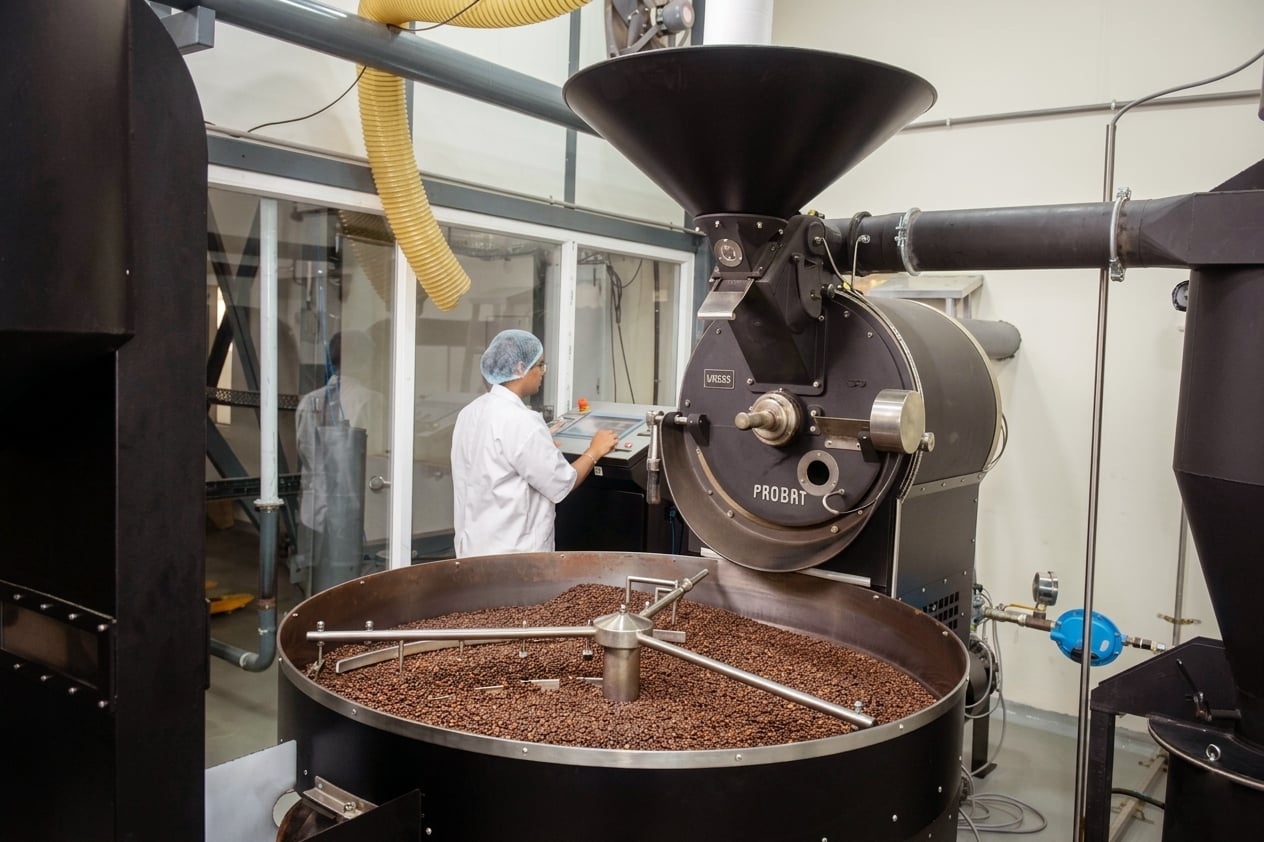
This pilot is a single-machine roastery producing specialty coffee for retail and wholesale customers. The roaster is the production workhorse — eight to twelve batches a day, five recipes in regular rotation, an experienced operator running every shift.
What we connected
Siemens S7-1200 PLC over the S7 protocol. We read nine signals from data block DB200 — bean temperature, exhaust temperature, gas percentage, airflow, drum RPM, ambient temperature, drum temperature, burner percentage, inlet air temperature. Polled every five seconds. Approximately 17,000 readings per machine per day during active production.
What we're learning
The first weeks of operation have been spent calibrating thresholds against the operator's actual practice — finding the band between "Vigora flagged it but the operator was right to ignore" and "Vigora correctly caught a drift." That calibration is the early work. As the system accumulates episodes, the recommendations sharpen.
The site
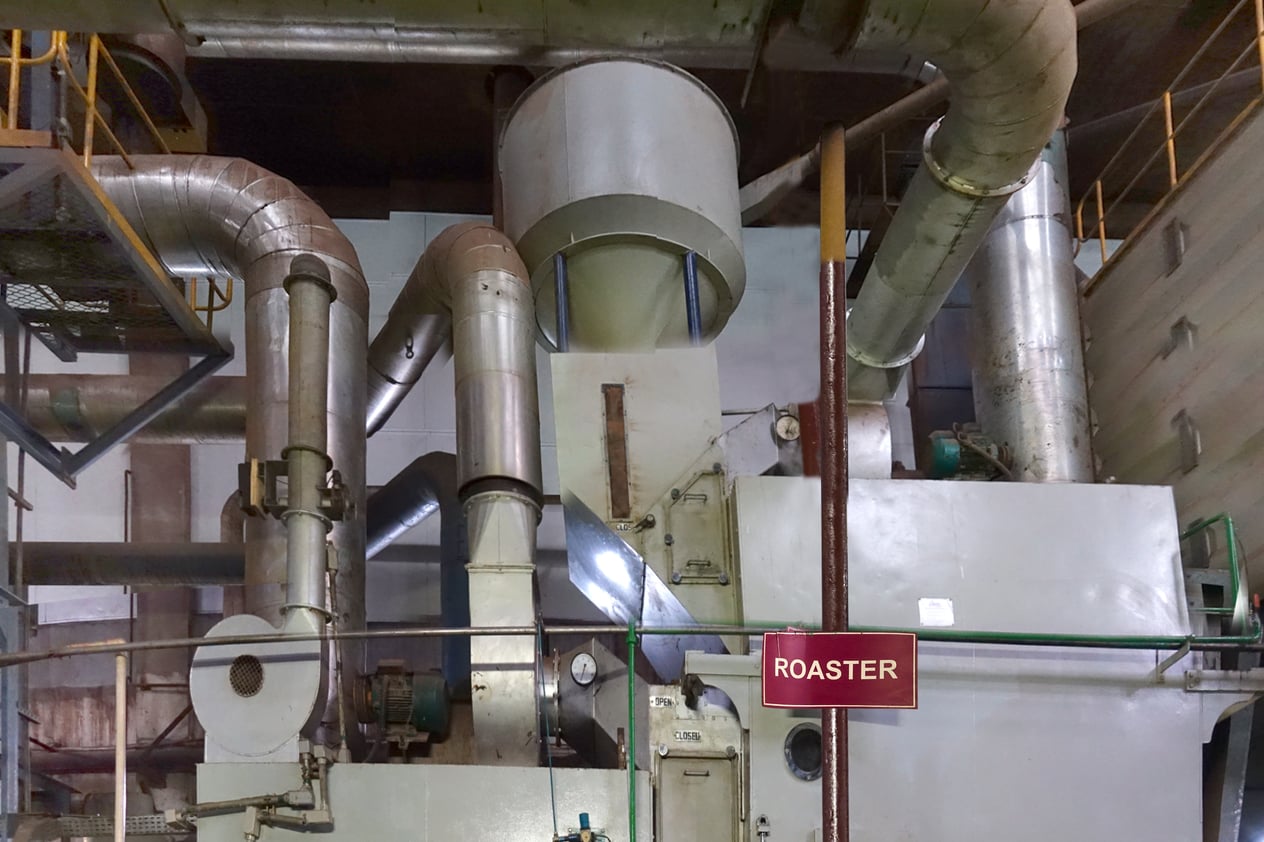
This pilot is the larger production facility — soluble coffee at industrial scale, with a continuous processing line spanning six distinct stages. Unlike the single-machine roastery, this is where the multi-machine version of Vigora is being proven out. The pilot started with one machine and is expanding stage by stage as profiles are prepared.
What we connected
Today: an industrial continuous-process roaster via Siemens S7 over data block DB21, reading eleven signals (bean temperature, dryer temperature, cooler temperature, furnace flame, furnace temperature, air temperatures across the roaster). The remaining five machines (extractor, evaporator, centrifuge, spray dryer, boiler) have profiles in preparation — connection profiles ready, signal offsets pending operator confirmation. Each machine adds to the picture of what's happening across the line.
What we're learning
A continuous-process line generates different signals than a batch operation. Roaster batch boundaries don't apply when the next machine in the line is always running. We're working with the production team to identify how to track operational episodes that span multiple machines — a single roast batch becomes a downstream input for the dryer, which becomes input for the cooler. Cross-machine learning is part of why this pilot is more interesting than a single-machine deployment alone.
I see what's happening on the line. Vigora sees what's happening across batches. We're starting to catch things earlier — small drifts that I would have missed because I was looking at the next machine.
We chose these two pilots deliberately. The single-machine pilot is a focused environment where we can prove the six-stage loop works end-to-end on one machine, with one operator, one set of recipes. The multi-machine pilot is a stress test for the platform's multi-tenant, multi-machine architecture, where the harder problems live.
Together they cover the operational range of our target customer: from a one-machine specialty roaster to a multi-stage industrial line. The platform is the same. The deployment shape is the same. What differs is the depth of process and the number of signals.
We're not optimizing for impressive metrics. We're optimizing for evidence that the architecture holds across the range of factories we want to serve next.
The remaining five machines at the multi-machine pilot come online as profiles are prepared and signal offsets are confirmed with the production team. The deployment work for each new machine follows the same gated, white-glove pattern.
Per-recipe anomaly baselines are coming. Today the system learns thresholds at the signal level. We're moving toward baselines that respect recipe context, so the same signal can have different "normal" depending on what's being produced.
Cross-machine episode tracking. A single roast batch becomes input for the dryer, then the cooler. We're working out how to track operational episodes that span multiple machines without losing the per-machine clarity operators rely on.
The pilots are early. We're learning daily. If you're considering a deployment of your own and want to understand what the first weeks look like in practice, we're happy to walk you through what we've seen so far — including the things that haven't worked.